
How to Sell Art Online in 2026: Complete Guide for Artists
Learn how to sell art online in 2026: choosing a platform, setting up your store, marketing, and reaching buyers. Step-by-step guide for artists.
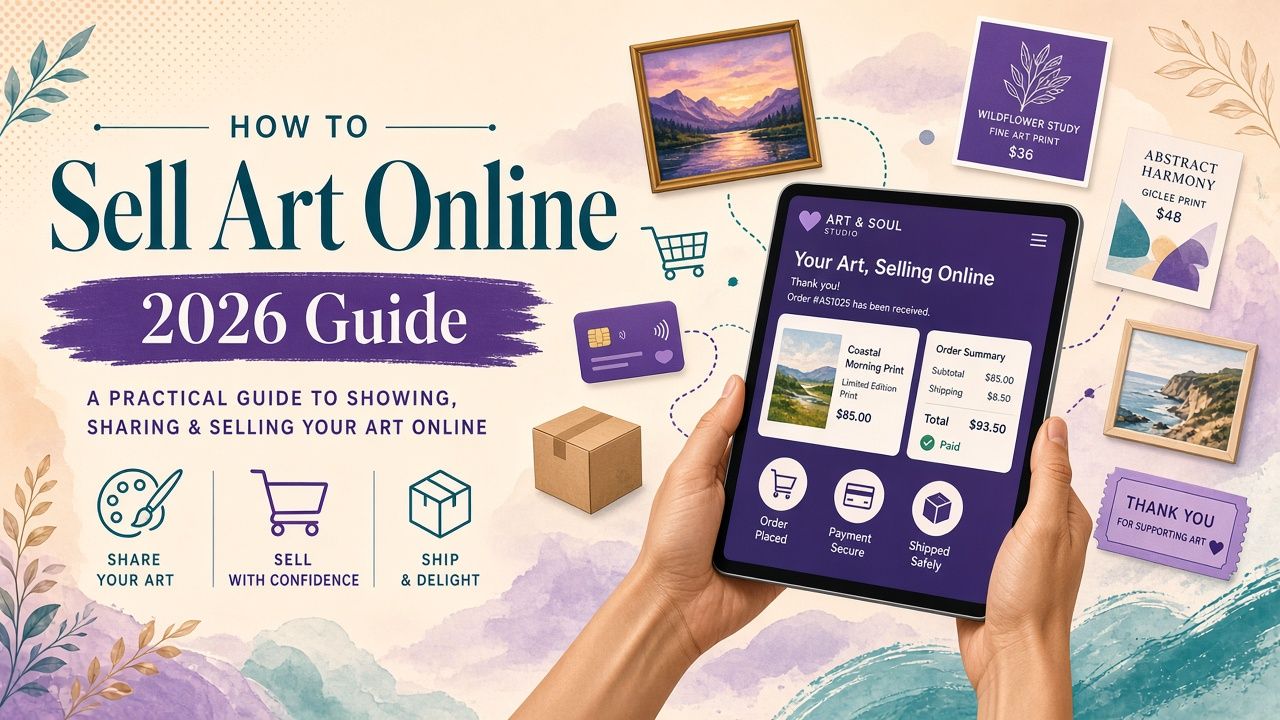
How to Sell Art Online in 2026: Complete Guide for Artists
Selling art online has never been more accessible—or more competitive. Whether you're a painter, photographer, sculptor, or digital artist, the right strategy can help you reach buyers and build a sustainable art business. This guide covers everything: choosing a platform, setting up your store, marketing your work, and maximizing sales.
Step 1: Choose Your Selling Platform
Your platform choice sets the foundation for your online art business. You have three main options:
- Marketplace-only (Etsy, Saatchi Art): Built-in traffic, but high fees and no custom branding
- Website builder (Shopify, Squarespace, Art Storefronts): Your own site, but you're responsible for all traffic
- Full artist platform (Brakebee): Custom site with Custom Sites, marketplace discoverability, plus marketing tools, CRM, Social Central, integrated email suite, and print-on-demand
Our recommendation: Brakebee is the complete artist platform—not just a website builder. You get a professionally designed custom website (Custom Sites), access to the Brakebee Marketplace for discoverability, marketing tools, CRM capabilities, and Social Central for managing your social presence. Learn more: Best website builder for artists
Step 2: Set Up Your Online Store
- Professional photography: High-quality images are non-negotiable. Use natural light and neutral backgrounds.
- Compelling product descriptions: Tell the story behind each piece. Include size, medium, and care instructions.
- Clear pricing: Be transparent about pricing, shipping, and return policies.
- Easy navigation: Make it simple for buyers to browse by category, size, color, or theme.
- Mobile-friendly design: Most buyers shop on mobile. Ensure your site looks great on phones and tablets.
Step 3: Add Print-on-Demand (Optional)
Print-on-demand lets you sell prints, canvases, and merchandise without holding inventory. Platforms like Brakebee have POD built in, so you don't need to juggle third-party services. Read more: Print-on-demand for artists
Step 4: Market Your Art
- Social media: Instagram, Pinterest, and TikTok are powerful for visual artists. Brakebee Social Central lets you manage and schedule posts across all your social channels from one place. Post regularly and engage with your audience.
- Email marketing: Build an email list and send newsletters with new work, behind-the-scenes stories, and exclusive offers. Brakebee's complete email suite (via the CRM package) includes newsletters, campaigns, and list-building tools built right into your platform.
- SEO: Optimize your website for search engines. Use descriptive titles, alt text, and blog content.
- Collaborations: Partner with other artists, influencers, or brands to expand your reach.
- Marketplace presence: The Brakebee Marketplace makes your work automatically discoverable to buyers browsing the platform, giving you exposure beyond your own site.
Step 5: Optimize for Sales
- Offer multiple price points: Originals, prints, and merchandise at different price levels
- Run promotions: Limited-time discounts or free shipping can drive urgency
- Collect reviews: Social proof builds trust and increases conversions
- Track your metrics: Use analytics to see what's working and what's not
The Bottom Line
Selling art online requires the right platform, professional presentation, consistent marketing, and patience. The artists who succeed are those who treat their art as a business—and choose platforms that support growth.
Ready to get started? Brakebee Custom Sites gives you everything you need: a custom-designed website, built-in marketplace, print-on-demand, and transparent pricing. Learn more →
Read more: Best website builder for artists | Artist portfolio websites that sell